Military Custody Documentation for Deployments and Time
· By MyCourtDocs
Military deployments bring unique custody hurdles. Learn how to track virtual visits, orders, and transitions to protect your parenting time.
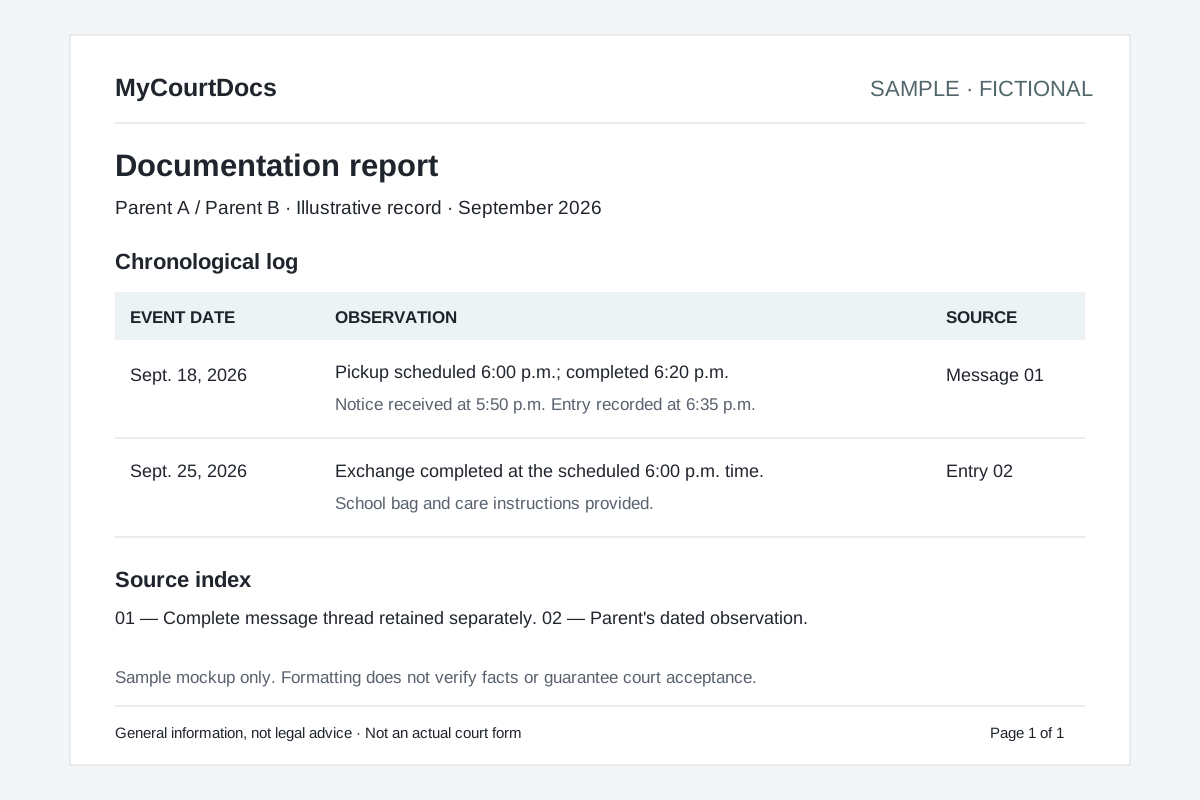
Navigating child custody while serving in the military introduces unique legal, logistical, and emotional complexities. Temporary duty assignments (TDY), permanent changes of station (PCS), and overseas deployments often disrupt traditional parenting schedules. For military parents, maintaining clear, factual, and consistent documentation is essential to protecting parental rights and ensuring your child's well-being.
Courts make custody decisions based on the best interests of the child, but judges unfamiliar with military life may misunderstand the realities of service. Whether you are preparing to deploy or supporting your child while the other parent is on duty, detailed records bridge the gap between military obligations and family court expectations.
Why Military Custody Documentation Requires a Distinct Approach
Standard custody arrangements assume both parents reside in relatively stable geographic locations with predictable schedules. Military service directly challenges this assumption. Mobilization orders, field exercises, and sudden shifts in availability require proactive record-keeping rather than reactive explanations.
Federal protections, such as the Servicemembers Civil Relief Act (SCRA), provide legal safeguards against default judgments while on active duty. Many state jurisdictions also have specific statutes governing temporary custody modifications during deployment. However, these legal protections depend on written records rather than verbal assurances.
When you maintain an objective record of your involvement, you provide your legal counsel with the evidence needed to request appropriate stays, draft temporary custody orders, and ensure parenting time resumes smoothly post-deployment. The key is to demonstrate that military service does not equal parental absence or neglect.
Documenting Pre-Deployment Preparations and Legal Safeguards
Before deployment orders take effect, preparation is critical. Your documentation should establish that you planned carefully for your child's physical, emotional, and financial needs during your absence.
The Family Care Plan (FCP)
Most military branches require single parents and dual-military couples to maintain an active Family Care Plan. While an FCP is an administrative military document rather than a state court order, family courts frequently review it to assess parental planning.
Keep a dedicated file containing:
- Current copies of your signed Family Care Plan.
- Written correspondence with the designated temporary caregiver confirming their willingness and capability to care for the child.
- Proof of military medical enrollment (DEERS), dental coverage, and identification cards arranged for your child.
- Records of special power of attorney documents executed for medical and educational decision-making.
Formal Deployment Notice
Provide written notice of your deployment to the other parent as early as possible. Rules regarding mandatory notification timelines vary by state, but providing timely written notice helps prevent claims that you abandoned your parenting time.
Keep copies of the certified letter, email, or formal message delivering your official orders and expected departure dates. If the other parent requests modifications or refuses to follow existing agreements, log their written responses without editorial commentary. If you are preparing records for family court, learning how to document custody for court ensures your timelines, notices, and exhibits meet formal evidentiary standards.
Tracking Virtual Visitation and Communication During Deployment
Parenting does not stop when you are overseas or in the field. Maintaining consistent contact with your child is vital for their emotional stability and serves as concrete proof of your ongoing parental involvement.
Operational security (OPSEC) and limited connectivity can make scheduled calls difficult. This makes objective logging of every interaction—and every missed attempt—critical.
What to Record for Every Communication
When logging contact during deployment, record factual, observable details:
- Date and Time: Note the local time where you are and the local time for your child.
- Platform Used: Specify whether you used phone calls, video platforms, recorded video messages, regular mail, or specialized programs like United Through Reading.
- Duration: Log the length of the call or video session.
- Summary of Topics: Keep brief notes on what was discussed (e.g., "Discussed child's third-grade science project and upcoming soccer tournament").
- Behavioral Observations: Note the child’s demeanor neutrally (e.g., "Child was engaged and shared drawings," or "Child appeared tired and ended call after 5 minutes").
Documenting Communication Barriers
Occasionally, co-parenting conflicts arise during deployments. The other parent might cancel scheduled video calls, fail to answer the phone, or claim the child is unavailable.
Document these occurrences neutrally without attributing motives. Record the scheduled time, the steps you took to reach out, how long you waited, and the exact response received (or note the absence of a response). Avoid labeling the other parent as obstructive or hostile. Simply record the pattern of missed calls alongside text messages or emails showing your attempts to connect. Using the best custody documentation app for one parent can help you securely timestamp these missed calls and messages even while stationed abroad.
Managing Delegated Parenting Time and Caregiver Records
Many state statutes allow a deploying servicemember to request that a portion of their parenting time be delegated to a family member, such as a stepparent or grandparent. This maintains continuity for the child and keeps family bonds intact while the parent is away.
If your custody agreement or temporary deployment order grants delegated parenting time, maintain clear records of how that time is used:
- Exchange Logs: Have the delegated caregiver log pick-up and drop-off dates, times, and locations.
- School and Medical Involvement: Retain records of the caregiver attending parent-teacher conferences, school events, and medical check-ups.
- Communication with the Non-Deploying Parent: Keep copies of all written communication between the designated caregiver and the other parent regarding routine schedules and decisions.
If the other parent refuses to honor delegated visitation, ensure the caregiver documents the refusal in writing rather than engaging in verbal arguments at exchange sites. Keep copies of the court order, the written request for the scheduled exchange, and the other parent's written refusal.
Reintegration: Documenting the Return and Transition
The end of a deployment brings another logistical shift. Returning servicemembers must often navigate reintegration, leave periods, and the resumption of their standard custody schedule.
Temporary orders established for deployment typically specify that previous custody arrangements resume upon your return. However, friction can occur if the other parent argues that the child has adjusted to a new routine and resists returning to the original schedule.
Steps to Document Upon Return
- Provide Formal Return Notice: Send written notice of your return date and end-of-deployment orders to the other parent and your family law attorney as soon as permitted by operational security.
- Track the Step-Up or Resumption Timeline: If your order calls for an immediate return to the standard schedule, record the date parenting time resumed. If your order outlines a phased transition period, log each step as it occurs.
- Log School and Community Reconnection: Keep receipts, calendar entries, and check-in logs showing your immediate resumption of daily parenting duties, such as school transportation, doctor appointments, and extracurricular activities.
- Organize Historical Records: Compile your deployment logs, communication records, and travel notices into a single chronological file. When presenting your transition back to a family court judge, understanding the process of building a court binder: what to include and leave out will help you present clear, relevant records without overwhelming the court with extraneous details.
Best Practices for Objective Military Parenting Logs
Family court judges rely on objective evidence when resolving custody disputes. Emotional entries, attacks on the other parent's character, or vague complaints diminish your credibility.
Follow these practical guidelines when recording custody events:
- Focus on Observable Actions: Instead of writing, "The other parent refused my call because they want to cut me off," write, "Placed video call at scheduled time (1800). No answer. Sent text at 1805. Received text at 1820 stating child was already asleep."
- Preserve Digital Evidence: Export and back up emails, text threads, and video call logs. Cloud-based backups ensure records are not lost if military equipment is updated or reassigned.
- Keep Travel Details Factual: If international relocations or official travel impact pick-ups, track tickets, flight itineraries, and formal leave forms. If you face disagreements regarding travel clearances, review guidance on how to document custody travel and passport disputes to keep records clear and compliant.
- Separate Military Jargon from Court Documents: Clearly translate military acronyms (e.g., PCS, TDY, OCONUS, LES) into plain language for civilian judges and custody evaluators.
By maintaining structured, contemporaneous, and neutral records throughout every phase of your service, you safeguard both your parental rights and your child's stability.
This article is for informational purposes only and is not legal advice. Consult a licensed attorney in your jurisdiction.
Frequently Asked Questions
Does a military Family Care Plan override a civilian custody order?
A Family Care Plan is an internal military readiness document rather than a binding state court order. However, family court judges often review it as evidence of your advance planning and organizational responsibility for your child.
How should I document virtual visitation during deployment?
Log the date, time, platform, and duration of every call or video session, along with brief notes on topics discussed. If a scheduled call is missed or unanswered, record the exact outreach time and any written response without editorial commentary.
Can I delegate my parenting time to a family member while deployed?
Many states allow deploying parents to request that a stepparent, grandparent, or other close relative exercise a portion of their visitation time. Rules vary significantly by jurisdiction, so consult a local family law attorney.
What protections does the Servicemembers Civil Relief Act (SCRA) provide in custody cases?
The SCRA allows active-duty servicemembers to request a temporary stay (pause) of civil court proceedings, including custody matters, if military duties prevent them from appearing. Speak with your installation legal assistance office or a family law attorney immediately upon receiving court notices.