Documenting Relocation and Move-Away Custody Concerns
· By MyCourtDocs
Facing a move-away or relocation custody dispute? Learn how to document daily routines, travel logistics, and written notices factually for family court.
When a co-parent proposes moving to a new city, or a parent moving out of state becomes a realistic possibility, custody arrangements face immense strain. Move-away requests fundamentally disrupt established schedules, school routines, and direct parenting time.
Courts do not evaluate move-away disputes based on parental frustration or general worry. Instead, family court judges examine concrete facts to determine what arrangement serves the child's best interests. Whether you are the parent seeking to relocate or the parent responding to a proposed move, maintaining structured, factual records is essential.
Learning how to properly gather relocation custody evidence allows you to present a clear, calm picture of your child’s daily life and community ties without resorting to emotional arguments.
Understanding What Courts Evaluate in Move-Away Custody Cases
Relocation disputes—often referred to in family law as move-away custody cases—vary significantly depending on state statutes and existing court orders. Many jurisdictions require advance written notice (such as 30, 60, or 90 days) before a parent can legally move a child beyond a specific geographic boundary. Because legal standards and statutory notice periods differ across regions, you should always verify local requirements with a family law attorney.
Judges generally weigh several core factors when deciding whether a child should relocate:
- The child's relationship with each parent and the historical division of caregiving responsibilities.
- The distance of the proposed move and the practical impact on regular parenting time.
- The child's ties to their current school, medical providers, extracurricular activities, and extended family.
- The stated reasons for the move, such as employment opportunities, cost of living, or educational programs.
- The relocating parent's willingness to support ongoing communication and meaningful contact with the non-relocating parent.
When presenting your case, judges look for tangible evidence rather than subjective predictions. Knowing how to systematically document custody for court helps demonstrate stability, daily involvement, and factual impact.
Documenting Day-to-Day Involvement and Community Ties
One of the most critical elements in any relocation case is establishing the child’s established routine and roots within their current community. If you are opposing a move, you must clearly show what the child stands to lose. If you are requesting a move, you must show how the child's daily care will translate seamlessly into the new environment.
Daily Caregiving Logs
Keep an ongoing, contemporaneous record of who handles routine parenting tasks. Courts look at historical involvement, not just what parents promise to do in the future.
Track specific data points, such as:
- Morning routines, school drop-offs, and afternoon pick-ups.
- Attendance at parent-teacher conferences, school concerts, and athletic events.
- Medical and dental appointments, including who schedules visits, attends examinations, and administers prescriptions.
- Bedtime routines, homework assistance, and weekend activities.
School and Community Integration
Gather objective third-party records that illustrate your child’s community foundation. These documents confirm stability and local support networks:
- Report cards, attendance records, and teacher notes reflecting academic progress.
- Individualized Education Programs (IEPs) or specialized therapy records that may depend on existing service providers.
- Rosters, registration forms, and coach contact details for sports teams, dance classes, or community groups.
- Documentation of frequent interaction with local extended family members, such as grandparents, cousins, or long-term family friends.
If you are organizing these records for legal counsel or a custody evaluation, review strategies for building a court binder: what to include and leave out to ensure your records remain clear and accessible.
Tracking Relocation Notices and Written Communications
How the subject of relocation is introduced, discussed, and managed provides crucial context for the court. Written communications often reveal whether parents are acting transparently or attempting to create unilateral facts on the ground.
Maintain copies of all communication regarding the potential move, including emails, text messages, and parenting app threads.
Formal and Informal Notice
Record the exact date and manner in which the move was first discussed or formally served. Note whether the notice included practical details, such as:
- The proposed physical address and neighborhood.
- The specific school district and academic programs identified for the child.
- The proposed start date for the move.
- A proposed parenting schedule addressing school breaks, holidays, and summer travel.
If a co-parent mentions moving casually or makes conflicting statements regarding their plans, save the written correspondence. For instance, if one message states the move is for a new job offer and another states it is to live with an extended family member, preserve both messages with visible timestamps. If the move involves transitions tied to a partner, you may also find value in reviewing our guidance on documenting concerns about a co-parent's new partner or live-in.
Professional, Child-Focused Responses
When discussing relocation in writing, maintain a polite and businesslike tone. Avoid accusatory statements, emotional venting, or character attacks. Instead, ask factual, practical questions:
- "Could you share the academic calendar and enrollment requirements for the school district you are considering?"
- "How do you propose handling the logistics and costs of transportation for weekend visits?"
- "What schedule do you envision for major holidays and summer breaks to ensure the child maintains consistent contact with both parents?"
Courts view parents favorably when they focus on the child's practical welfare, even during high-stakes disagreements.
Documenting Travel Feasibility, Costs, and Logistics
Relocation inevitably transforms local custody schedules into long-distance parenting plans. Courts must determine whether the proposed travel schedule is realistic, affordable, and safe for the child.
Both parents should document the logistical realities of the proposed distance:
Travel Times and Transit Options
Map out the real-world travel options between the two residences:
- Driving distances: Record the exact mileage, expected driving hours during peak traffic times, and potential weather-related road closures during winter months.
- Flight options: Research commercial flight availability, direct versus connecting flights, layover times, and airport transit distances. Note how travel hours will affect a young child's sleep schedule or school attendance.
- Unaccompanied minor policies: If the proposed plan relies on air travel, document airline age limits, supervision fees, and scheduling restrictions. For moves requiring cross-border transit or international travel, see our guide on how to document custody travel and passport disputes.
Financial Impact
Document the economic burden of the proposed schedule. Long-distance custody can involve significant ongoing expenses, such as:
- Airline tickets, baggage fees, and unaccompanied minor charges.
- Fuel, tolls, vehicle maintenance, and rental cars.
- Lodging expenses for a visiting parent traveling to the child's new city.
Compile realistic estimates of these costs over a twelve-month period. Courts frequently address who will absorb travel expenses, and concrete figures prevent speculative debates during hearings.
Managing Virtual Visitation and Continuity of Contact
When distance separates a child from one parent, virtual communication becomes a primary tool for maintaining the parental bond. Courts expect parents to support phone calls, video chats, and messaging.
Documenting virtual visitation helps show whether long-distance contact is practical and whether both parents facilitate it cooperatively.
What to Record
Keep an objective communication log noting:
- The agreed-upon days and times for calls or video chats.
- Whether calls connected on time, were answered late, or were missed entirely.
- The duration of the contact.
- Any observable issues, such as constant background noise, premature termination of calls, or third parties interrupting the conversation.
Objective Logging Examples
Always record observable facts rather than your interpretations:
- Ineffective entry: "The other parent intentionally ruined our call and acted manipulative as usual."
- Effective entry: "Scheduled video call set for 6:30 PM. Call initiated at 6:30 PM and 6:40 PM; no answer. Co-parent sent a text at 7:15 PM stating the child had already eaten dinner and was going to sleep. Rescheduled call for tomorrow at 6:30 PM."
Keeping factual entries demonstrates consistency and reliability. Avoid labeling the other parent’s motives; simply document the time, the attempt, and the factual outcome.
Best Practices for Organizing Your Relocation Evidence
When preparing documentation for legal counsel, custody evaluators, or court hearings, organization is just as vital as the evidence itself. Disorganized files, unreadable screenshots, and vague recollections can weaken an otherwise solid position.
To keep your records clear and effective:
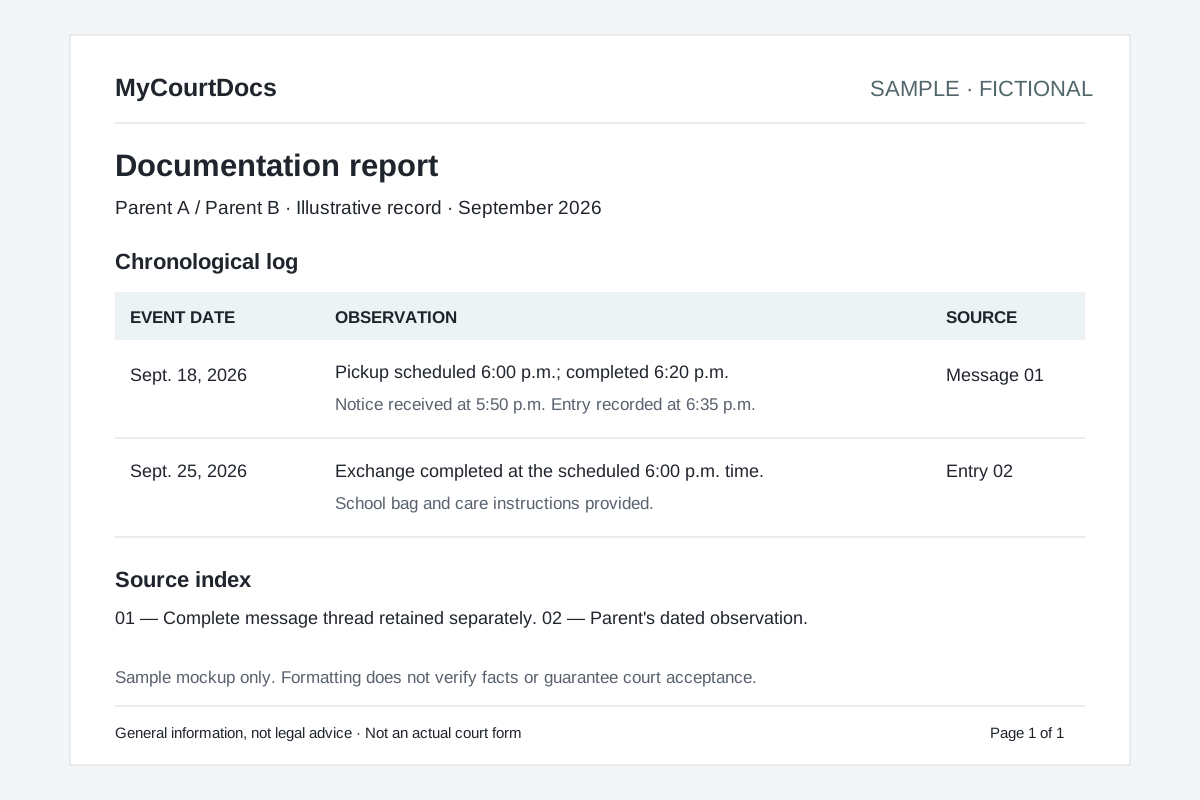
- Maintain a Chronological Timeline: Build a summary timeline tracking key events, such as initial notices, job offers, school registration deadlines, and formal discussions. Include dates, times, and direct references to corresponding exhibits.
- Preserve Metadata and Full Context: When saving text messages or emails, ensure dates, full timestamps, and sender/recipient contact details are clearly visible. Avoid cropping screenshots in ways that exclude surrounding context.
- Keep Original Records: Store copies of original utility bills, school transcripts, enrollment applications, and medical records in clean digital folders labeled by category and date.
- Remain Fact-Focused: Review your notes regularly to eliminate emotional adjectives or clinical labels. Focus exclusively on observable events, dates, logistics, and your child’s educational, physical, and emotional routines.
Relocation disputes can be stressful, but maintaining structured, court-ready records ensures your legal team has the factual foundation needed to represent your child's best interests.
This article is for informational purposes only and is not legal advice. Consult a licensed attorney in your jurisdiction.
Frequently Asked Questions
How much notice must a parent give before moving out of state?
Requirements vary significantly by state. Many jurisdictions require 30 to 90 days of written advance notice before moving outside a specified geographic area or school district. Consult a local family law attorney to confirm the exact statutory requirements in your jurisdiction.
What evidence best demonstrates a child's community ties?
Courts look for concrete evidence of the child's daily routine and stability. This includes school records, medical history, extracurricular attendance logs, proof of close ties to local extended family, and a detailed parenting calendar showing regular daily involvement.
How do I document travel feasibility in a long-distance custody dispute?
Document travel logistics factually. Provide flight schedules, drive times, transit costs, and airline unaccompanied minor policies. Show how the travel time will impact the child's school attendance, rest, and weekend routines with realistic cost calculations.
How should I document virtual visitation and phone contact?
Keep a neutral, contemporaneous log of all scheduled calls and video chats. Record dates, scheduled times, whether the call occurred, the duration, and whether technical or scheduling obstacles were resolved cooperatively.